UNITED NATIONS, NEW YORK – At the 2026 ECOSOC Youth Forum held at the United Nations Headquarters from April 14-16, Austin Han, an 11-year-old student from Beijing, emerged as a compelling voice for a more empathetic future. As one of the youngest participants at this year’s forum, Han shared his transformative journey—from mapping local river ecosystems to pioneering inclusive technology—offering a new blueprint for urban inclusion.
Redefining Leadership: The Power of “Helping Others Succeed”
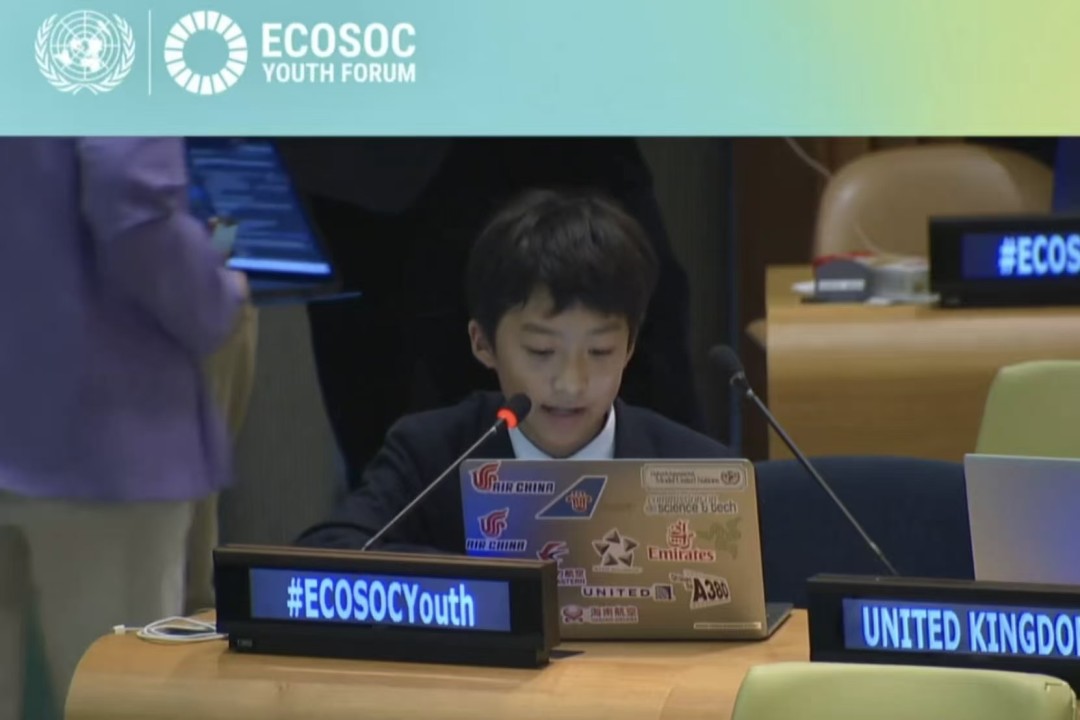
Speaking during the session titled “Youth Leadership: A Critical Force in Shaping a Sustainable and Inclusive Future for All” in the historic Trusteeship Council Chamber, Han delivered an address that combined intellectual maturity with profound empathy.
“Many people think a leader is someone in front,” Han stated before a global audience of delegates and ambassadors. “But at 11, I learned that real leadership is not about how far you go alone, but how many people you help along the way.” With only 15% of the Sustainable Development Goals (SDGs) currently on track globally, he urged for youth to be positioned as “key partners” rather than mere beneficiaries.
Hyperlocal Impact: Rivers as “Classrooms for Sustainability”
During the Asia-Pacific regional session, Han shared his grassroots ecological work in Beijing. Through the “SDD Kids” project, he transformed the Wenyu River into a living laboratory for SDG 15 (Life on Land).
“To many, a river is just water; to me, it is a window into nature,” Han explained. By documenting over 40 species of fish, birds, and frogs through weekend biodiversity monitoring, he utilized professional equipment for water quality testing and digital mapping. He proposed a provocative question to regional leaders: “How can we utilize hyperlocal youth projects to build a network of ‘citizen scientists’ across the Asia-Pacific?”
“With, not just For”: Harmony Through Co-Creation
Han’s focus on hyperlocal data informs his broader vision for smart cities. He introduced a core advocacy: “Future cities must move from building FOR marginalized groups to building WITH them.”
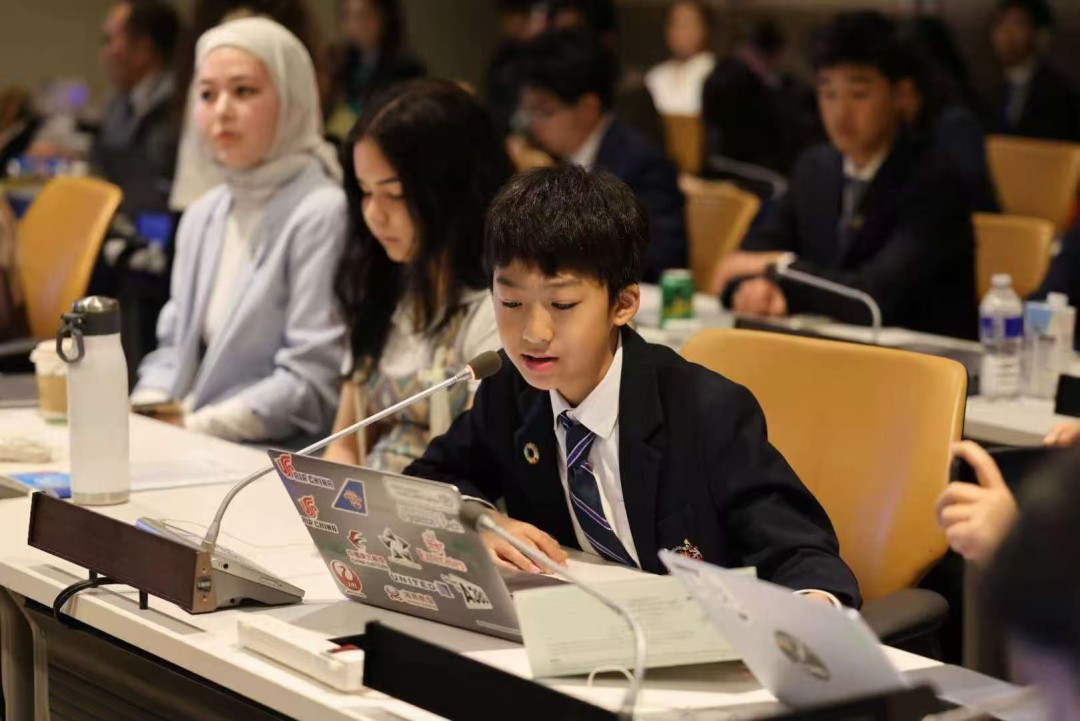
Austin Han speaking confidently at the discussion table in the UN General Assembly Hall.
“We talk about smart cities in terms of 5G and efficiency. But if a visually impaired musician cannot navigate safely, is that city truly ‘smart’?” Han illustrated this through his experience founding the Black Crocodile Band at age nine. “I thought I was there to help, but I learned that true inclusion is co-creation. By adjusting my own rhythm to match my visually impaired bandmates, my empathy grew. Harmony is greater than the sum of its parts.” Today, he continues this mission with his second musical venture, the Nevermind Band.
Inclusive Engineering: Digital Foundations for Equality
Self-identifying as an “Inclusive Engineer,” Han applies the empathy gained from music to the world of technology. He utilizes open-source programming to develop accessibility tools for his visually impaired peers.
To Han, the open-source spirit is the ultimate embodiment of SDG 17 (Partnerships for the Goals). “In the open-source world, people everywhere share tools and knowledge so that everyone, regardless of background, can contribute to solutions.” Through code, he empowers marginalized youth to transition from “users” to “co-creators.”
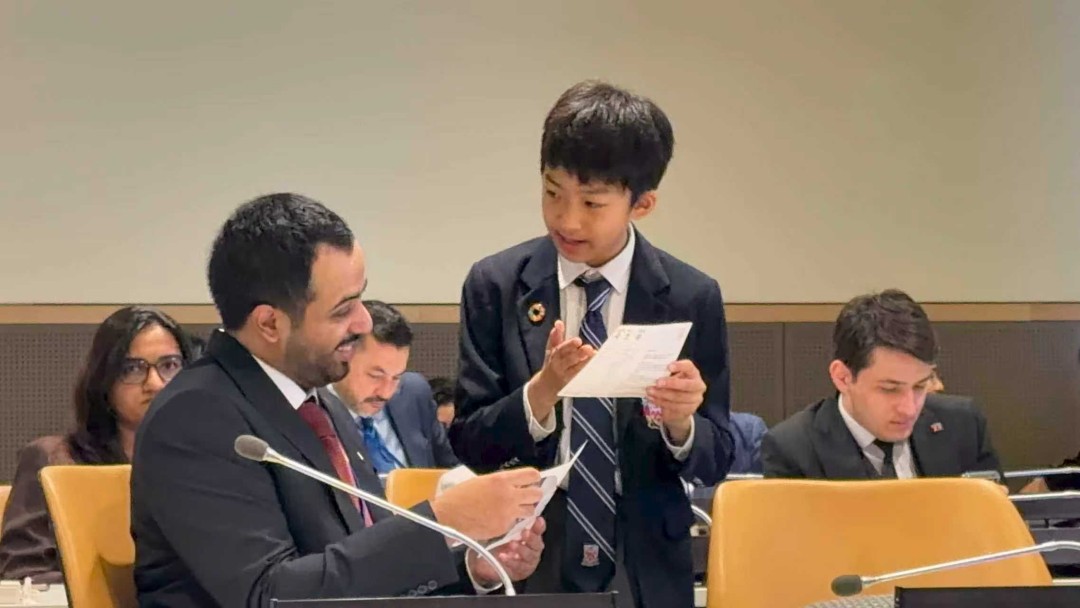
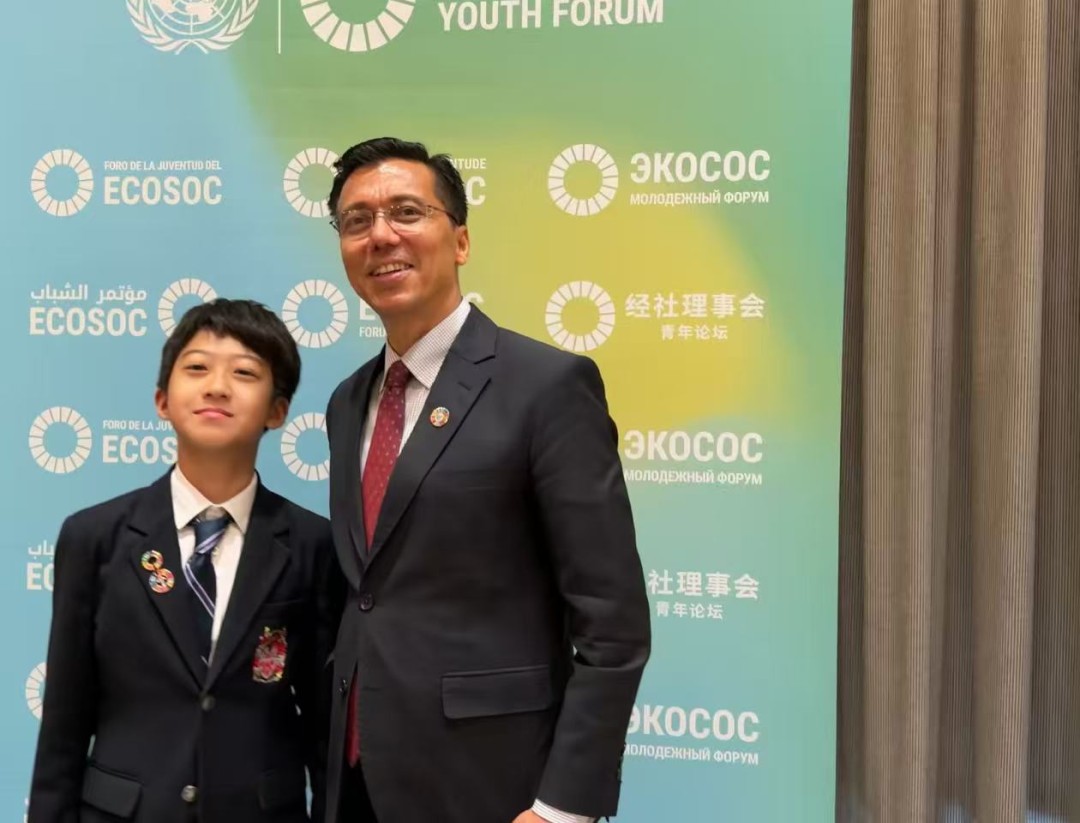
Austin Han presenting a “Chip Art Postcard”—upcycled from discarded electronic components—to a senior UN official.
Global Recognition: A Benchmark for Future Leadership
Han’s micro-actions resonated deeply with international leaders. Following the forum, Galina Fedorova, founder of the Silicon Valley-based Gooddler Foundation, shared her reflections on LinkedIn.
“We were deeply changed by Austin’s courage, wisdom, and independence,” Fedorova wrote. “What struck me most was not just his technical talent, but his drive to understand different states of being. He proved that inclusion is never charity; it is equal co-creation.”
According to Fedorova, Han represents a new generation of leaders who refuse to follow the status quo, possessing clear independent values and the ability to find humanity within the cold exterior of technology.
From the biodiversity maps of Beijing’s Wenyu River to the global stage of the United Nations, Austin Han is sending a clear message to the world: When youth are empowered to co-create, the cities of the future will be more than just cold digital grids—they will be warm, empathy-first communities.
Media Contact
Company Name: ECOSOC
Contact Person: Kiki Gao
Email: Send Email
Country: United States
Website: https://ecosoc.un.org/en/events/2026/youth-forum