
Originally Posted On: https://hometipsforyou.com/how-to-extend-the-life-of-an-aeron-chair-for-10-plus-years/
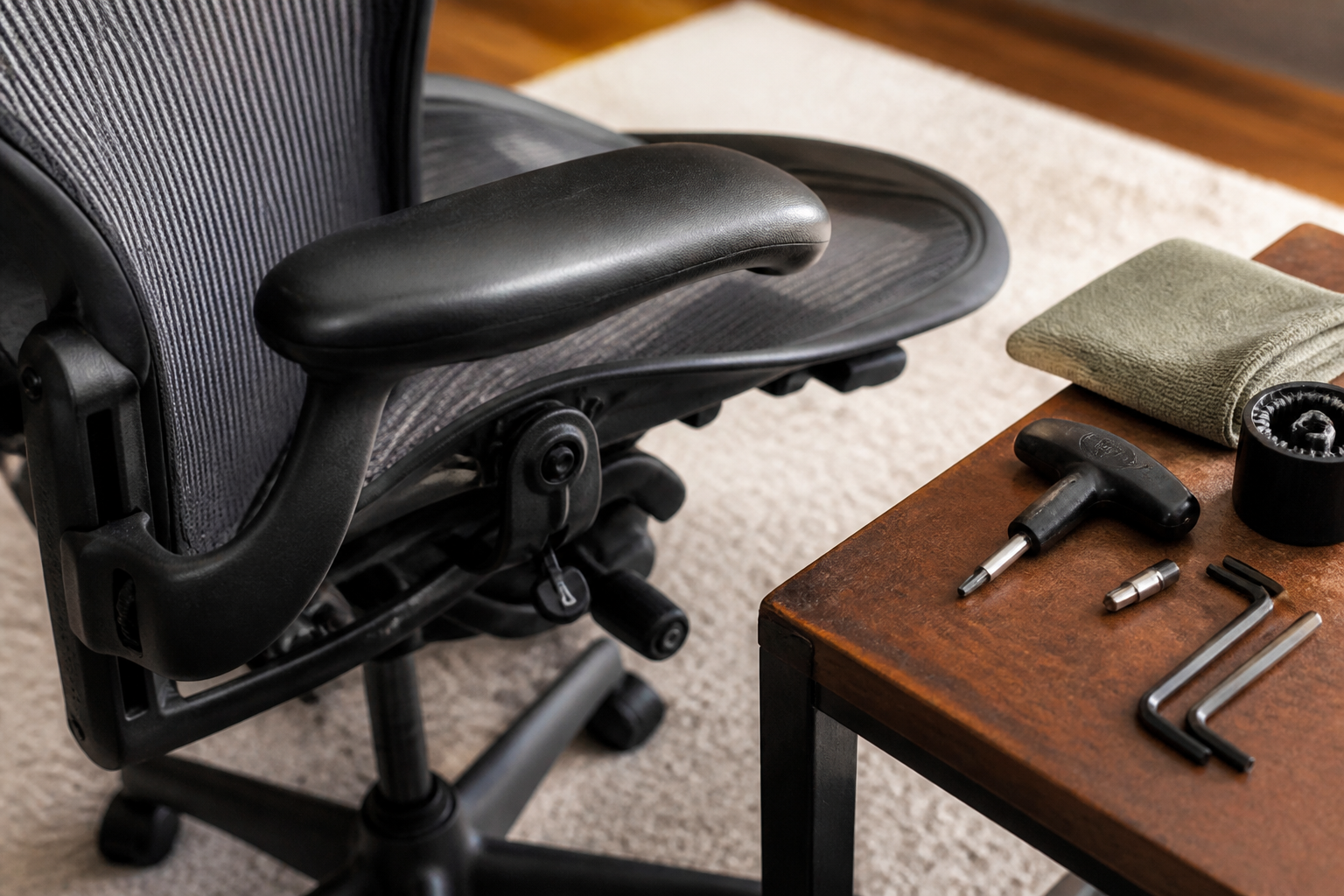
Twelve years. That’s the manufacturer’s baseline expectation for a well-maintained Aeron chair, and plenty of owners push well past it. But here’s the thing — most people who buy an aeron chair treat it like a couch, not a piece of precision equipment with a pneumatic cylinder, mesh suspension, and mechanical joints that need attention. Skip the maintenance, and you’ll be shopping for a replacement in year five instead of year fifteen.
In practice, the difference between a chair that quits early and one that outlasts two job changes comes down to a handful of habits: picking the right size at purchase, adjusting it correctly from day one, and catching small mechanical issues before they turn into a broken tilt mechanism or a seized cylinder. None of this is complicated. It just requires knowing what to check and when.
What You’ll Achieve and What You Need Before You Start
Picture a home office three years from now — the same Aeron chair you bought today, still gliding smoothly, mesh still taut, no squeaks on recline. That’s realistic. But only if you treat it like a piece of equipment, not furniture you forget about.
The Real Lifespan of a Herman Miller Aeron Chair
Herman Miller built this thing to survive corporate use for over a decade, often across multiple shifts. A well-maintained Herman Miller Aeron ergonomic chair can realistically hit 12-15 years before major components wear out. The mesh, cylinder, and casters are the parts that fail first — and they’re also the easiest to replace.
Tools and Parts to Keep on Hand (Casters, Cylinder, Mesh Cleaner)
Keep a small kit ready:
-
Replacement casters (standard, hardwood, or deep-carpet)
-
A spare pneumatic cylinder
-
Mesh-safe cleaner and a soft brush
-
Allen wrenches for arm and tilt hardware
-
Silicone spray for the tilt mechanism
Having these on hand means a five-minute fix instead of weeks without a proper chair.
Step 1: Pick the Right Size and Configuration From the Start
Wrong size kills chairs faster than bad posture ever will. Constant strain on a frame built for a different body accelerates wear on the tilt mechanism, the mesh, and the pneumatic cylinder underneath the seat. Get this right on day one, and you’ll save yourself years of premature breakdown.
Reading the Herman Miller Aeron Size Chart (Size A, B, and C)
Herman Miller built the Aeron in three sizes — A, B, and C — to fit roughly the 1st to 99th percentile of adult bodies. Checking Herman Miller Aeron sizes before buying tells you seat depth, width, and height ranges so the chair actually supports your frame instead of fighting it.
Matching Your Body to Size B vs Size C Before Wear Becomes a Problem
Size B fits about 70% of users, roughly 5’3″ to 6’2″ and 130-230 lbs. Size C suits taller, heavier users past 5’9″ and 200 lbs. Buying a Herman Miller Aeron executive office chair in the wrong size forces constant readjustment, straining the tension mechanism daily. Check a Herman Miller Aeron Executive Office Chair listing’s specs against your own measurements first.
Step 2: Set Up and Adjust Your Aeron Chair the Correct Way
Are you sitting in your Aeron the way it was actually designed to be sat in? Most owners never touch half the adjustments, and that’s exactly how premature wear starts. Getting the setup right isn’t cosmetic — it’s the difference between a chair that lasts a decade and one that breaks down in three years.
Dialing In the Pneumatic Cylinder, Tilt, and Torsion Settings
The pneumatic cylinder controls seat height, and it should let your feet rest flat with thighs level. Don’t force it up and down repeatedly with body weight still on the seat — that shortens cylinder life fast. Set tilt tension so the chair reclines with light pressure, not a violent snap-back. The torsion knob adjusts resistance for your body weight; too loose and the mechanism absorbs constant shock, too tight and you’re straining forward all day.
Positioning the Headrest and Arms to Reduce Mechanical Strain
If your model includes a headrest, align it with the base of your skull, not your neck. Arms should sit low enough that shoulders relax completely. For anyone comparing options, Madison Seating’s lineup of the best Herman Miller chair models makes proper fit easy to find.
Step 3: Build a Weekly and Monthly Maintenance Routine
Here’s a number that surprises most owners: dust and skin oils build up on mesh at a rate that reduces breathability by roughly 15% within a year if nobody wipes it down. That’s not a dealbreaker, but it’s a habit worth building. A five-minute weekly routine beats a two-hour deep clean every spring — and it’s a lot easier to stick with.
Cleaning the 8Z Pellicle Mesh Without Damaging It
Skip harsh solvents. Use a vacuum brush attachment to lift dust from the weave, then wipe with a cloth dampened with mild soap and water. Never soak the mesh — moisture trapped in the tension zones can warp the weave over time. Let it air dry fully before sitting again.
Ratchet, Caster, and Base Inspection Schedule
Once a month, spin each caster and listen for grinding — dirty wheels chew up flooring and strain the base. Check the ratchet mechanism under the seat for smooth engagement, and confirm the pneumatic cylinder rises without hesitation. If your household includes a second desk setup, an ergonomic office chair for home office use deserves the same monthly check. Small issues caught early save major repairs later.
Step 4: Repair or Replace Worn Parts Before They Fail Completely
Most owners assume a sagging seat or a slow-sinking cylinder means the chair’s done. That’s just not true. An Aeron work chair is built from serviceable parts, not disposable ones — the pneumatic cylinder, tilt mechanism, and casters can all be swapped without replacing the whole frame.
When to Repair vs When to Buy a Compressor or Cylinder Replacement
If the seat height won’t hold or drifts downward under weight, that’s a failing pneumatic compressor, not a lost cause. Swap the cylinder rather than the chair. The same goes for a torsion spring that’s lost tension in the ratchet mechanism controlling recline — a $60-$100 part replacement beats buying new. Mesh sagging in the seat pan? Replace the Pellicle, not the whole shell.
Common Mistakes That Shorten an Aeron Chair’s Working Life
-
Ignoring squeaks — they signal dry pivot points, not just noise.
-
Cranking tilt tension too tight, straining the torsion mechanism.
-
Using the wrong casters for hard floors, wearing the base early.
-
Skipping the arm pivot check — loose arms strain the frame over time.
Step 5: Verify Your Aeron Chair Is Set Up for Another Decade
Picture this: you’ve had the same chair for nine years — one afternoon the seat pan sags a half-inch lower than it used to, no matter how you pump the lever. That’s your cylinder losing pressure — and it’s a sign, not a death sentence.
Signs Your Setup Is Actually Working (And When to Consider a Refurbished Herman Miller Aeron as an Alternative)
Good signs: the tilt tension holds without drifting, the mesh still has spring instead of a permanent stretch mark, and your lower back isn’t aching by 3 pm. Bad signs: squeaking under the seat, a headrest that won’t lock, or armrests that slide down on their own.
If repair costs start creeping close to replacement territory, don’t just chase parts. Many owners compare notes on repair timelines and part sourcing before deciding, and it’s worth checking what others found before sinking more money into a decade-old frame. At that point, a professionally certifiedHerman Miller Aeron ergonomic office chair often makes more sense than chasing discontinued components for a chair that’s already given you ten good years.
How-To FAQ
How long should an Aeron chair actually last with proper care?
A well-maintained Aeron chair should last 12 to 15 years, even under daily 8-hour use. The frame and aluminum base are built for heavy-duty office life, so most failures come from neglected mesh, a worn pneumatic cylinder, or casters nobody bothered to swap out. Stay on top of the small stuff, and the big stuff takes care of itself.
Can I replace the cylinder myself, or do I need a repair tech?
Yes, replacing the pneumatic cylinder is a DIY job that takes about 15 minutes. Flip the chair, remove the base with a rubber mallet, pull the old cylinder — press in the new one. You don’t need special tools beyond the mallet — just don’t force it sideways, or you’ll bend the mounting post.
Why does my Aeron feel like it’s sinking or losing tilt tension over time?
That’s usually a worn torsion spring or a cylinder losing air pressure, not a design flaw. Check the tilt tension knob first — if cranking it doesn’t stiffen the recline, the cylinder or tilt mechanism needs attention. This is a common wear point after 7-8 years of daily use and a normal part of the chair’s life cycle.
How often should I really be cleaning the mesh?
Wipe the 8Z Pellicle mesh weekly and deep-clean it monthly. A dry cloth or vacuum brush handles daily dust; for deeper grime, use a mild soap solution and a soft brush, then air-dry completely. Skip anything with bleach or alcohol — it breaks down the mesh fibers and shortens its working life fast.
Is it safe to keep using an Aeron chair with a wobbly base or squeaky casters?
Squeaky casters are harmless, but a wobbly base isn’t something to ignore. A loose base can indicate a stripped mounting point or a cracked cylinder housing, and continuing to sit on it risks a sudden drop. Tighten what you can, and if the wobble persists, pull the base and inspect the connection point before your next full workday on it.
Does swapping to hardwood-floor casters or a headrest shorten the chair’s overall life?
No — swapping casters or adding a headrest doesn’t shorten the chair’s life at all. These are designed as user-serviceable upgrades, and Herman Miller built the frame to accept them without extra strain on the mechanism. If anything, correct casters for your floor type reduce wear on the base by preventing drag and uneven rolling.
A decade of solid performance from an Aeron chair doesn’t happen by accident. It happens because someone picked the right size, dialed in the tilt and torsion settings early, and stuck to a cleaning routine instead of ignoring the mesh until it sagged. Small habits — wiping down the Pellicle monthly, checking casters before they grind, catching a slow cylinder before it fails outright — add up to years of extra service. Skip those habits and even the best-engineered chair on the market will show its age fast.
Here’s the honest truth: most people who think their chair is “worn out” actually just neglected basic upkeep. Fix that, and the chair keeps going.
But if your current unit is genuinely past saving — cracked frame, shredded mesh, a base that won’t lock — don’t force it. That’s the point where a professionally restored, certified option makes more sense than pouring money into parts. Either way, treat the chair like the long-term investment it’s built to be. Set a reminder right now to inspect your setup this weekend, and give it the next ten years it deserves.


