
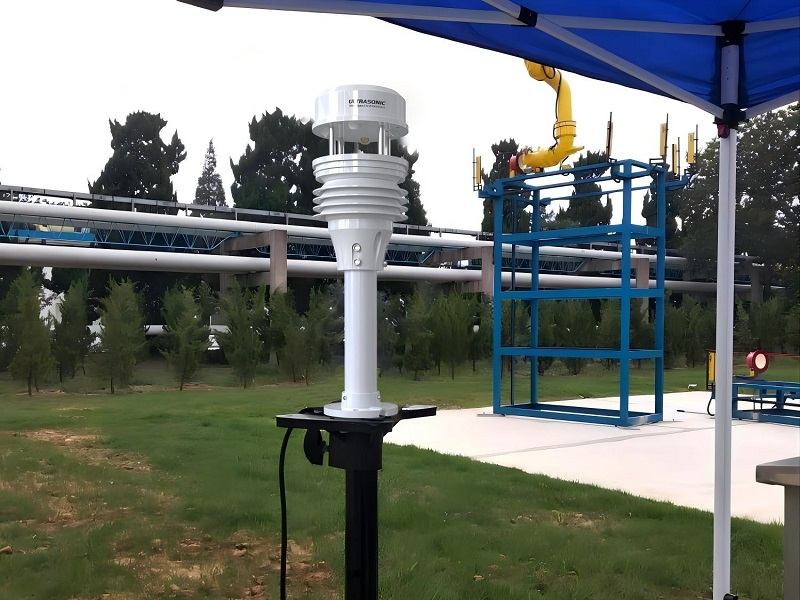
Jinan, Shandong Jul 15, 2026 (Issuewire.com) Shandong Renke Control Technology Co.,Ltd., based in China, has completed a design update to its ultrasonic wind speed and direction sensor, changing the position of the ultrasonic probes and reshaping the exterior housing. According to the company, orders for the sensor rose 24.5 percent quarter-over-quarter following the update, with a notable share of the growth coming from overseas customers who use the instrument for outdoor environmental and meteorological monitoring.
The main change in the redesign involves the position of the ultrasonic probes. On earlier models, as well as on many competing ultrasonic anemometers currently sold on the market, the probes sit at the bottom of the sensor housing. In dusty or sandy environments, airborne particles can settle around the lower probes over time, and once enough material accumulates, it can interfere with the ultrasonic signal and reduce measurement accuracy. Renke’s updated design moves the probes to the top of the housing, a position intended to reduce the buildup of sand and dust on the sensing components during long-term outdoor use. This innovative inverted design significantly reduces the impact of wind, sand, and heavy rain on the ultrasonic path, thereby improving the accuracy of wind speed and wind direction measurements by 10%.
The housing shape was also revised. The earlier design has been replaced with a smoother, more streamlined exterior, which the company says lowers wind resistance around the probes and reduces the disturbance the housing itself creates in the airflow being measured. Renke said this contributes to more accurate wind speed and direction readings, particularly in windier conditions where turbulence introduced by the sensor housing can affect results.
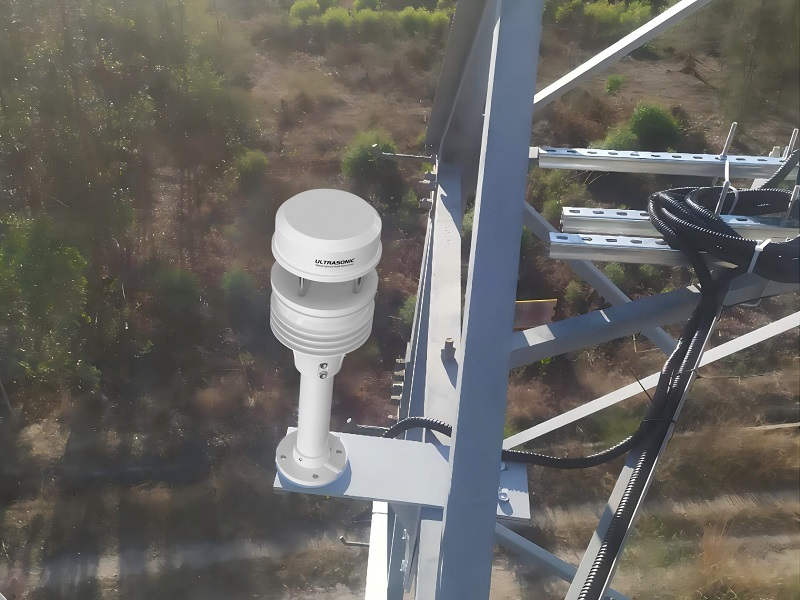
Binda, Product Manager at Renke, said the redesign was driven by feedback from installers working in difficult outdoor conditions. “Customers told us the previous housings were bulkier than they needed to be for how they were mounting them, mostly on poles and masts in exposed locations,” Binda said. “We redesigned the exterior and implemented a new design for the measurement end, which minimizes the impact of environmental factors on the products accuracy. This combination appears to be very popular with overseas buyers.”
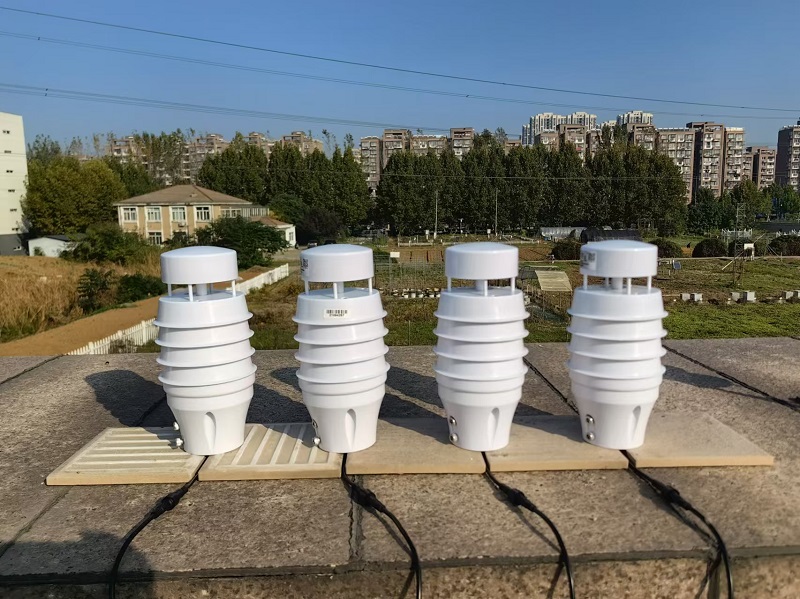
Compared with the previous generation, the new models have a smaller housing and a more streamlined exterior, which the company says has made installation and shipping easier for customers, particularly those ordering in bulk for multi-site projects. The sensors also carry a higher rated measurement accuracy: the 3D ultrasonic anemometer, for example, measures wind speed to within 0.2 meters per second and wind direction to within 2 degrees, and can continue reporting data at zero wind speed.
A distributor in Turkey placed an order for more than 1,000 units of Shandong Renke Control Technology Co., Ltd.’s redesigned ultrasonic wind speed and direction sensors in June, after testing the updated design under field conditions.
According to Renke, the Turkish distributor tested the redesigned sensors before placing the bulk order, running its own evaluation of the units after they arrived. The distributor’s tests returned results the customer considered satisfactory, based on which it proceeded with the order of over 1,000 units. Renke did not disclose the name of the distributor, but mentioned that the customer uses the product on trucks to monitor wind speed and direction while in motion.
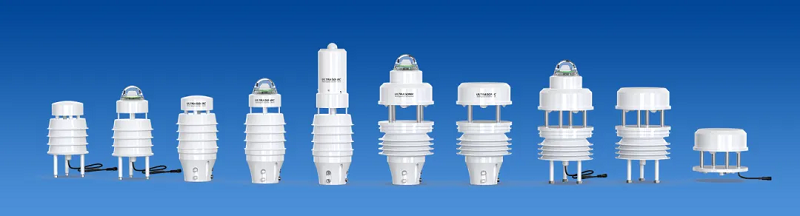
Renke said the redesigned sensors are used in ports, marine and coastal monitoring, bridge and tunnel safety systems, road traffic management, and agriculture, in addition to standalone meteorological stations. Because the sensors communicate over RS485 with Modbus-RTU or standard analog output, they can typically be added to an existing monitoring network without replacing other equipment already installed at a site.
Renke said the probe redesign grew out of a broader process the company uses to track how its products perform after they reach customers. Lei Yang, General Manager of Renke, said the company reviews customer feedback on a set schedule and passes recurring issues to its research and development team, which works through them in order of how often they come up.
“We collect feedback from customers on a regular cycle, both on what’s working and where a product is falling short,” Lei Yang said. “That feedback goes to our R&D team, and they work through it starting with the issues that come up most often. It’s how we keep improving the products and stay competitive in the market.”
Renke’s sensors are calibrated before shipment and are certified by China’s National Institute of Metrology, in addition to holding CE, ISO 9001, FCC, and RoHS certifications. Specifications for the ultrasonic models are published on the company’s website.
https://www.renkeer.com/product/ultrasonic-anemometer/
https://www.renkeer.com/product/ultrasonic-wind-speed-direction-sensor/
https://www.renkeer.com/product/ultrasonic-weather-station/
Media Contact
Shandong Renke Control Technology Co.,Ltd.
High – Tech Zone, Jinan, Shandong, China
Source :Shandong Renke Control Technology Co.,Ltd.
This article was originally published by IssueWire. Read the original article here.


